
BACK TO ALL BLOGS 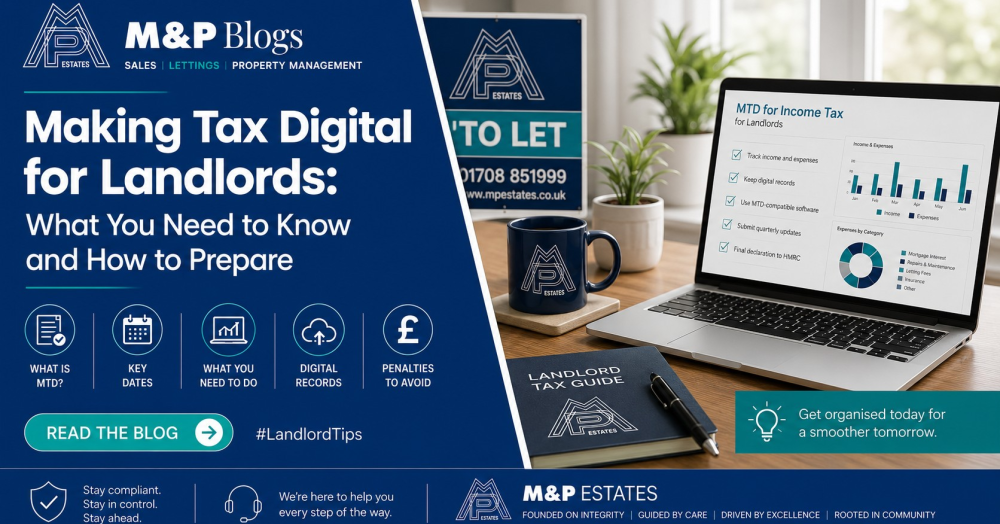
Making Tax Digital for Landlords: What You Need to Know and How to Prepare
What is Making Tax Digital (MTD)?
Making Tax Digital (MTD) is a government initiative designed to modernise the UK tax system, making it more efficient and easier for individuals and businesses to keep their tax records and submit returns. Essentially, it means moving tax administration online, with a focus on digital record-keeping and quarterly updates to HMRC.
While MTD for VAT has been in effect for some time, the next significant phase, MTD for Income Tax Self Assessment (ITSA), is set to impact landlords. This will require most self-employed individuals and landlords with annual business or property income above £10,000 to keep digital records and use MTD-compatible software to send quarterly summaries of their income and expenses to HMRC.
How Will MTD Specifically Affect Landlords?
For landlords, MTD for ITSA represents a significant shift from the traditional annual self-assessment process. Instead of submitting one tax return each year, you will need to:
- Keep Digital Records: All your property income and expenses must be recorded digitally, using MTD-compatible software. This means moving away from paper spreadsheets or manual ledgers.
- Submit Quarterly Updates: Every three months, you will need to send a summary of your income and expenses to HMRC via your MTD software. These are not full tax returns but rather regular updates.
- Submit an End of Period Statement (EOPS): After the final quarter, you will submit an EOPS to finalise your property income and expenses for the tax year, making any necessary accounting adjustments.
- Submit a Final Declaration: This will replace the current self-assessment tax return, bringing together all your income sources (property, employment, other self-employment) for a final calculation of your tax liability.
This new system aims to give HMRC a more real-time view of your tax position and help you manage your finances throughout the year, potentially reducing the end-of-year rush.
Practical Steps Landlords Need to Take to Prepare
Preparing for MTD now will save you stress and ensure compliance when the changes come into effect. Here are some practical steps:
1. Understand Your Income Threshold
The £10,000 income threshold applies to your gross income from property (before expenses). If your total gross property income is above this, you will likely be mandated into MTD for ITSA. It's important to clarify if this applies to you.
2. Choose MTD-Compatible Software
This is perhaps the most crucial step. You will need to select software that is recognised by HMRC as MTD-compatible. Many popular accounting software packages are already MTD-ready, offering features specifically for landlords. Research your options and consider what best fits your needs and budget
3. Digitize Your Records
Start transitioning your record-keeping to a digital format. If you're currently using spreadsheets, ensure they can be easily imported into your chosen MTD software. If you're still using paper, now is the time to digitise everything. This includes rent receipts, invoices for repairs, mortgage interest statements, and any other relevant financial documents.
4. Get Organised with Your Expenses
MTD will require more frequent categorisation of income and expenses. Develop a clear system for tracking all your deductible expenses, such as agent fees, maintenance costs, insurance, and utility bills. Good organisation from the outset will make quarterly submissions much smoother.
5. Consider Professional Advice
While MTD aims to simplify tax, the transition can be complex. Consulting with an accountant or tax advisor who specialises in property and MTD can be invaluable. They can help you choose the right software, set up your digital records, and ensure you are fully compliant. We're here to guide, not pressure, and can often recommend trusted local professionals.
6. Stay Informed
HMRC continues to release guidance and updates on MTD. Keep an eye on official communications and reputable property news sources to stay abreast of any changes or further details. Our agency also strives to keep our landlord clients informed of significant regulatory shifts.
Making Tax Digital is a significant change, but with careful preparation, landlords can navigate it successfully. By embracing digital record-keeping and understanding the new submission requirements, you can ensure your property business remains compliant and efficient. If you're thinking of letting out your property, we offer flexible packages and full compliance support. Speak to our lettings team for tailored advice.